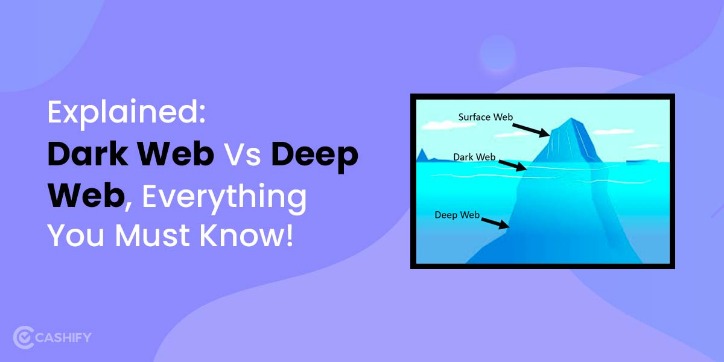
In the end, this is advantageous because one does not risk increasing personal safety or ethical integrity in this increasingly digital world. Moreover, the deep web is not completely hidden and is a part of WWW (World Wide Web), whereas the dark web is completely hidden and cannot be accessed by any normal search engines. It might seem a bit scary but the darknet is very useful too, for which it was created, to provide anonymity to the government official, journalists, and even us. But, not everything is illegal on the dark web, there are numerous active secret communities that use this channel as a method of establishing communications and are used by many different agencies. As an Internet consumer, you get all the relevant information whatever you search and there are almost unlimited resources available which are just 4% of the entire net.
Strong Authentication And Password Management
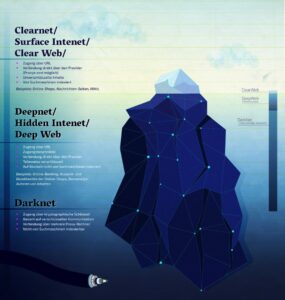
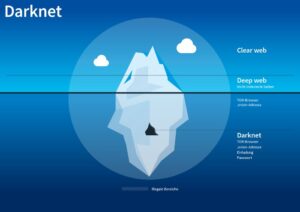
The deep web vs dark web are often misconstrued as being one thing when in reality they represent two different levels of the internet. The deep web refers to all that is accessible on the internet that is not indexed with those typical search engines. This would include a very broad range of content such as private databases, academic resources, and password-protected sites. Unlike the surface web, which is easily accessible and often serves legitimate purposes, the deep web holds valuable information that typically requires specific access credentials or subscriptions.
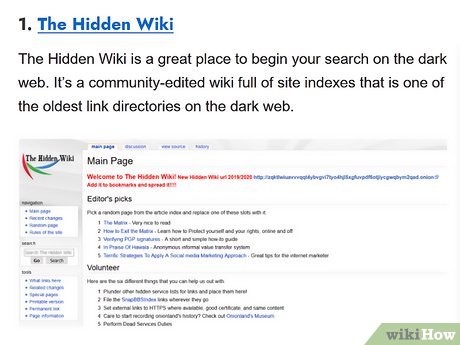
They also include internal company data and sites that are accessible via the Internet but protected by authentication. Using the Tor browser or trying to access a non-indexed page is perfectly legal. Just because a page cannot be accessed by search engines doesn’t mean it’s trying to promote illicit activity. Similarly, logging on to the Tor browser in order to browse the dark web doesn’t mean you’re breaking any laws. It’s a hidden collective of sites that you can only access through a special browser.
These networks live on the fringes of the hidden web, offering many layers of encryption to protect data in transit. The anonymity and privacy the dark web offers make it a popular springboard for crime. As a result, it’s replete with illegal and illicit activity, such as drug dealing and arms trafficking. The dark web marketplace is also fraught with malware, Malware-as-a-Service (MaaS) and stolen data (such as online credentials and credit card numbers) for sale. Basic online hygiene can prevent security lapses when accessing the deep web.
The Connection Between Dark Web And Cybercrime
Understanding their differences is essential for navigating the web safely and responsibly. To access it, you need specific tools like the Tor browser, which allows you to visit sites with .onion addresses, hiding both your identity and location. Unless you really have a specific agenda, it is advisable not to access the darkweb and deepweb. Having said that, the content on the deepweb can be accessed by a direct URL or IP address, but usually requires a password. The darkweb can only be accessed using dedicated software like TOR (The Onion Router) and I2P (Invisible Internet Project) and a VPN. But then again, that warning is also equally applicable on the regular web, so it really isn’t any different in this case.
Is It Legal To Browse The Dark Web?
Behind the anonymity of the censor-resistant platforms, Dark Web has flourished a thriving trade of all that is illegal and unacceptable in civil society. In their book Cryptopolitik and the Darknet, researchers Daniel Moore and Thomas Rid claimed that around 57% of the Dark Web includes illicit content. Just to be clear, the Deep Web is hidden for a good reason, and unlike what many sensationalist reports on the subject have said over the years, it has literally nothing to do with illegal activity. With the Deep Web, if you’re accessing personal accounts or sensitive data, the primary risks are related to security and privacy breaches. Any website that search engine crawlers can index belongs to the “surface web” — the public internet for you to find and use. Deep web lurks just below, in the form of your user accounts, administrator access to website back ends, and more.
Dark Web Vs Deep Web Explained: What’s The Difference?
Strong passwords are at least 16 characters long and contain uppercase and lowercase letters, numbers and symbols. To make your accounts as secure as they can be, make sure you’re not reusing or using variations of the same password across multiple accounts. With Pipeline, you leverage our cutting-edge Security Intelligence Vision.
Users also face the potential danger of government monitoring and surveillance — or scams and fraud, and other activities that can lead to financial loss and identity theft. On the Deep Web, these risks primarily relate to the fact that you need to authenticate to access a private site and that these sites contain a great deal of sensitive and valuable personal data. If your password or other credentials are the key to unlocking this data, then cybercriminals will attempt to steal these credentials via phishing, social engineering, malware, and other means. To access the dark web, you’ll need special search engines like Candle, Not Evil, and SearX, all of which require a specialized browser like Tor to work. On the dark web, neither users nor web administrators reveal themselves to each other, including their identity or their location. Hence, it’s very hard to shut down dark web servers or place geo-restrictions on users.
Netflix To Cancel Subscriptions Of Inactive Accounts
The web lets us use search engines such as Google to access thousands of websites. However, the websites you can access only make up a miniscule percentage of the entire web—better known as the surface web. Before we understand what the dark web is, let’s take a look back at our trusty World Wide Web.
What’s New In Acronis Cyber Protect Cloud 2506
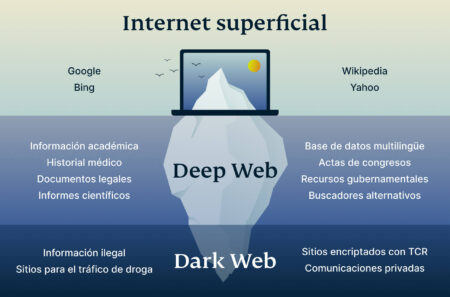
We rely on it for communication, shopping, learning, and entertainment. Yet, the surface internet we routinely access is only a fraction of what the web truly encompasses. Beneath the familiar websites lie layers of content that most users know little about.
Why Do People Use The Deep Web?
- One example is a website called the silk road which was on a darknet called TOR, used to sell drugs, and was taken down by the FBI.
- Simply put, search engines use software (called crawlers or web spiders) that visit all sites and send them for indexing.
- As there are dark web search engines, non-indexed pages must also exist, thus making up the deep web of the dark web, thus making it very deep.
- Although the Dark Web is often used for illegal activities, it’s not illegal to access it in many countries.
The dark web acts as a conduit for free speech and expression and an outlet for illicit activity. There is tremendous demand for it, even though some of the information is repugnant to most rational and empathetic people. Globally, governments are increasingly taking an aggressive approach to online surveillance and censorship, even in countries traditionally known for their free speech laws. Therefore, those who want to express themselves freely without fear of reprisal from government bureaucrats must remain hidden. As a result, dark web enthusiasts will likely create more sophisticated techniques to prevent detection. This may be accomplished by password-protecting sites that are only accessible to those who pay and restricting access to specific IP addresses.
Dark Web Monitoring
The Darknet is a subset of the Internet operating over encrypted, anonymous overlay networks that require special software like Tor, Freenet, or I2P. The Deep Web and Dark Web are often confused but serve different purposes. While the Deep Web is mostly safe and private, the Dark Web is a hidden network with added security risks. The Deep Web is essential for protecting personal privacy and securing sensitive information.
- Unfortunately, the dark web received a lot of media attention around 2014–15 when the founder of online black market Silk Road was convicted of various crimes, including several attempted murders-for-hire.
- It is crucial to exercise extreme caution when accessing the dark web.
- In this dark web vs deep web guide, we discuss how they differ in terms of underlying technology, applications and more.
- The Deep Web and Dark Web are often confused but serve different purposes.
- The Deep Web is primarily focused on privacy and security, housing a wide variety of essential and benign content.
Accessing the Dark Web safely requires specific tools like Tor and anonymity-focused practices. This part of the web is infamous for its Dark Web criminal activities, from drug trafficking to espionage. In fact, it is likely some 500 times larger than the surface web and may contain as much as 96 percent of online content.
Dark Web Vs Deep Web – Unveiling 5 Critical Differences
Law enforcement routinely shuts down and prosecutes sites and people doing illegal things on the Dark Web. However, these risks are similar to those on the surface web and the solution are the normal cybersecurity practices (secure connections, Multi-Factor Authentication, password managers, etc.). The darknets it operates on aren’t usually accessible via regular browsers – as we said, the Tor Network requires the Tor Browser. If your Social Security number is found on the dark web, take immediate action to protect yourself.