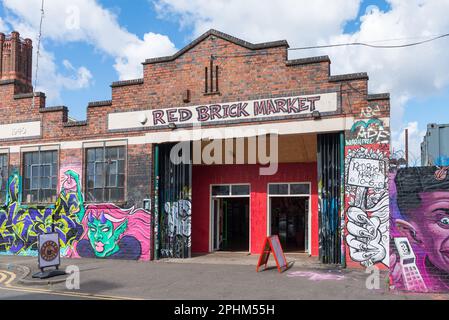
Our focus on authenticity and innovation empowers businesses with data-driven insights for informed decision-making. Carbon-tax exposure from the EU ETS and the Carbon Border Adjustment Mechanism raises production costs, pushing firms to adopt low-carbon fuels and efficient kilns. The Museum of Newport History is a history museum in the Old Brick Market building in the heart of Newport, Rhode Island, United States.
The building industry is the largest consumer of bricks worldwide due to the extensive share of brick masonry work used in walls, front elevations, and partitions. This application is vital in both the urban and rural areas where bricks are most preferred due to their strength and thermal insulation. The largest category in this regard is jumbo bricks, designed to achieve larger coverage per unit. Such bricks, usually 3⅝ inches high by 3⅝ inches deep by 11⅝ inches long, would find their place in projects where the number of joints is to be reduced and, at the same time, a finer and more troweled finish is desired on elevations. Therefore, jumbo bricks have a utility where fast construction progress and superior aesthetics are required in building purposes—like high-rise buildings or large commercial complexes. This scenario of building solutions with personalization fits into the changed preferences of property developers and homeowners for unique though durable building materials.
Related Reports
Such integration would maintain not only the functionality of bricks but also help the cause toward broader trends leading to smart infrastructure and practices in sustainable construction. Enhancements in brick manufacturing processes and material make it possible for companies to reach new market opportunities. With increased regard for sustainability around the world, developments in technology have resulted in the ability to produce bricks in an eco-friendly manner. Such bricks are generally made from recycled materials or produced by energy-efficient means and, thus, are more attractive to green consumers and regulatory institutions. Some of the growth factors for the brick market include the fact that an almost indispensable use in construction across regions, if not the globe, is noticed, owing to its durability and versatility.
H Edition India Energy Conclave 2025

The brick market is adapting to modern infrastructure needs, sustainable construction mandates, and new supply chain realities. Basically, bricks are made from clay, which is formed into various sizes and shapes and then burnt at high temperatures to gain strength and resilience. The combination of time-tested traditional practices and modern technological practices is done with intricate dexterity to ensure coherence in quality and yet allows scope for innovative designing. Very broadly, the world market for bricks is driven by the directions of the construction sectors that are desperate for both robust and sustainable building materials that can provide assured structural integrity and appeal.
LEGO Minifigures
Bricks form a greatly diversified market globally, with different types meeting special construction needs. Clay bricks, sand lime bricks, fly-ash clay bricks, and many such specialized variants fulfill various conditions of the environment and architectural needs. The global brick market remains an integral part within the structure of the construction industry, providing sustainable solutions that blend both tradition and innovation. Of course, that evolution marks all the more the resilience and adaptability true to this market and its relevance in a very dynamic and increasingly eco-conscious world. The brick market is an important sub-sector in the construction industry bearing important roles in fulfilling infrastructure needs throughout the world.
Search Popular Stores In America:

With the United States needing another 501,000 skilled workers in 2025, contractors view standard panels as risk hedges. Thin-brick slips and mechanically fixed veneers let masonry suppliers stay relevant, yet overall unit demand dips where full-bed bricks are displaced. Manufacturers invest in robotic laying lines to service hybrid wall panels but must amortize capital across a shrinking traditional volume base, squeezing margins. In October 2021, Wienerberger successfully finalized the purchase of Meridian Brick in the North American market, encompassing their operations in both the United States and Canada. Meridian Brick, known for its annual production of over 1.1 billion bricks, holds a prominent position as a primary brick supplier in regions such as Texas, the southeastern United States, Ontario, and Canada. Recent tariff measures in the United States are prompting manufacturers to boost domestic capacity, streamline cost structures, and revamp sourcing strategies.
Recent Industry Developments

Consequently, bricks find applications in the residential, commercial, and industrial building sectors. This includes fly ash clay bricks, made from industrial waste products like fly ash, which not only reuses waste but also imparts superb strength and integrity to the structure. In effect, these bricks easily become favored in sustainable construction methods, hence serving to achieve the global goal of low ecological footprint. Other brick innovations include interlocking designs for more rapid assembly and lighter types for seismic regions attributed to improving overall structural performance. In the dynamic flow of global construction materials, bricks emerge at the core because of their durability, versatility, and sustainability.
Extrusion reduces the weight of the bricks, making them lighter, and assisting in the firing and drying processes, which increases their adoption among brick manufacturers. While it appears that dry goods were indeed stored and sold on the premises, an official granary never materialized. In housing, rising mortgage rates in 2024 curtailed starts, but planned cuts from 2025 reinvigorate single-family construction, particularly in North America. Regulatory pushes for net-zero dwellings incentivize wall systems that retain heat and lower operational energy. Brick veneers matched with external-insulation finishing systems satisfy these performance metrics while preserving traditional curb appeal.
Segments Covered In The Report:
Other performers, unrelated to Harper and Powell, also used the space, but not on a regular basis. Bricks are fundamental structural components usually created from clay, shale or concrete and mortar is a binding material normally from a cement composition. They used in structures to develop walls, pavements and various other constructions and is in the form of rectangular blocks.
- A notable trend in the modular bricks market is the increasing preference for these standardized units, driven by their versatility in various construction applications.
- The pandemic highlighted the want for adaptable and sustainable construction answers, similarly, influencing market trends.
- For example, power-green blocks can help meet stringent environmental policies and decrease heating and cooling expenses, appealing to sustainability-targeted clients.
- They used in structures to develop walls, pavements and various other constructions and is in the form of rectangular blocks.
- This makes the demand for the bricks to always be met in the market to avoid a stagnated profitability of the brick making firms.
- A notable trend in this segment is the growing preference for bricks in sustainable and energy-efficient housing projects.
- This report employs a combination of primary interviews with executives, procurement leaders, and engineering consultants, as well as secondary research such as trade publications and policy documents.
- The segmentation of the global brick market, by type, mirrors the ongoing progress in construction technology and the set targets of being ‘green’.
- It’s best known for its eye-popping street art, culinary delights, vintage clothing, unique treasures, and independent shops.
- The global bricks market size accounted at USD 1.74 trillion in 2024 and is expected to be worth around USD 2.36 trillion by 2034, at a CAGR of 3.09% from 2025 to 2034.
- Nestled in the heart of the city, it offers a diverse range of gifts and culinary delights, making it a favorite spot for both visitors and locals.
Senior decision-makers can leverage these insights to refine strategy and strengthen competitive advantage in a dynamically shifting market. The Asia Pacific region is expected to see significant growth in the Bricks market in the coming years due to the growth of the construction industry in the region. Increasing government expenditure for reconstruction & repair of infrastructureis expected to drive the market.
Please Fill Out The Form Below For A Free PDF Report Sample & Online Dashboard Trial
Additionally, stringent building regulations promoting durability and thermal insulation contribute to increased brick usage. As European countries prioritize environmentally conscious building practices, the demand for bricks, with their versatility and green building potential, continues to grow, reflecting the region’s upward trajectory in the market. The Asia Pacific region is experiencing substantial population growth, urbanization, and infrastructure development. As a result, the demand for building materials, including bricks, has been consistently on the rise.
The market is open seven days a week from 11am to 11pm so you can always count on Ely’s Yard for some good grub if you’re in the area. If you’re looking for some bric-a-brac treasure, hunting for a bargain, antique shopping, or in the mood for endless street food options then the bustling Brick Lane Market is the place to be. Technically it’s a number of markets that all stretch the length of Brick Lane that are open both on weekdays and weekends, although Sundays are when the markets really come alive. Once you’ve worked up an appetite and you start to feel peckish, do not fret, you’ll find plenty of treats at London’s top food markets in Brick Lane to wolf down in delight. Now that we’ve taken a look into the different markets Brick Lane has to offer, let’s take a look at what you’ll find in and out of the stalls.
The demand for sustainable and energy-efficient buildings has led to an increased demand for clay and concrete bricks, creating opportunities for growth in the Bricks market. Moreover, the growth of the construction industry in emerging economies is also providing opportunities for market growth. Based on application, the market is segmented into residential building, commercial building, infrastructure, path, parterre, and landscaping. The market within the residential building segment is characterized by its adaptability and the diverse applications of bricks, from enhancing exterior facades to creating appealing interior spaces and functional outdoor landscapes.