Through an extensive network of over 3,200 registered vendors, the platform listed more than 17,000 drug-related products. From hard drugs like cocaine and heroin to synthetic opioids such as fentanyl, the offerings were both diverse and deadly. With every transaction conducted in Monero — a cryptocurrency known for its privacy features — law enforcement had significant difficulty tracking financial flows. THE HAGUE, Netherlands (AP) — Authorities in the U.S. and Europe arrested nearly 300 people, confiscated over $53 million, and seized a dark web marketplace as part of an international crackdown on drug trafficking that officials say was the largest operation of its kind.
Marketplace As Big As Silk Road Had More Than 600k Users And Turnover Of ‘at Least’ €250M
At the time, German authorities arrested the marketplace’s alleged operator and seized the site’s infrastructure, providing investigators across the world with a trove of evidence. Europol’s European Cybercrime Centre (EC3) and JCODE have since been compiling intelligence packages to identify key targets. Today (June 16, 2025), Europol announced the successful dismantling of Archetyp Market, the longest-running darknet drug marketplace, following a sweeping international operation coordinated across six countries.
Police Seizes Archetyp Market Drug Marketplace, Arrests Admin
- BKA’s announcement says investigations into Nemesis Market started in October 2022, involving German, Lithuanian, and American agencies, including the FBI, Drug Enforcement Administration (DEA), and the Internal Revenue Service Criminal Investigation (IRS-CI).
- On March 20, 2024, U.S., German, and Lithuanian law enforcement agencies seized Nemesis’ servers in a joint operation.
- The operation resulted in the seizure of 50.8 million euros ($53.4 million) — in cash and virtual currencies, nearly 1,900 pounds of drugs and 117 firearms in a series of raids in several countries.
- After Maximilian S.’s surprising confession at the end of September, the presiding judge, Norbert Göbel, found him guilty of constructing and running the Shiny Flakes online shop.
Maximilian was a busy young man who planned his operations meticulously and was adequately equipped for comprehensive trade in narcotics worldwide. He seems to have been especially diligent about securing the door to his room—to this day the defendant claims that his mother and stepfather knew nothing about his profitable startup because he would fortify himself in his room whenever he was conducting business. Another thing that stood out to investigators was the routine nature of his deliveries. According to prosecutors, a courier from the Netherlands drove to the Gohlis district of Leipzig each Thursday to replenish Maximilian’s supply of drugs—investigators knew this from watching the package station and the entrance to his house.
Global Takedown Of Archetyp Market: The End Of One Of Dark Web’s Largest Drug Marketplaces
Over its five years in operation, Archetyp Market recorded over 612,000 users and facilitated €250 million worth of illicit sales. But the platform’s downfall began with a coordinated effort between police forces, cybercrime experts, and judicial authorities. The Netherlands led the technical takedown of the market’s servers, while a 30-year-old German national, believed to be the site’s primary administrator, was captured in Barcelona, Spain.
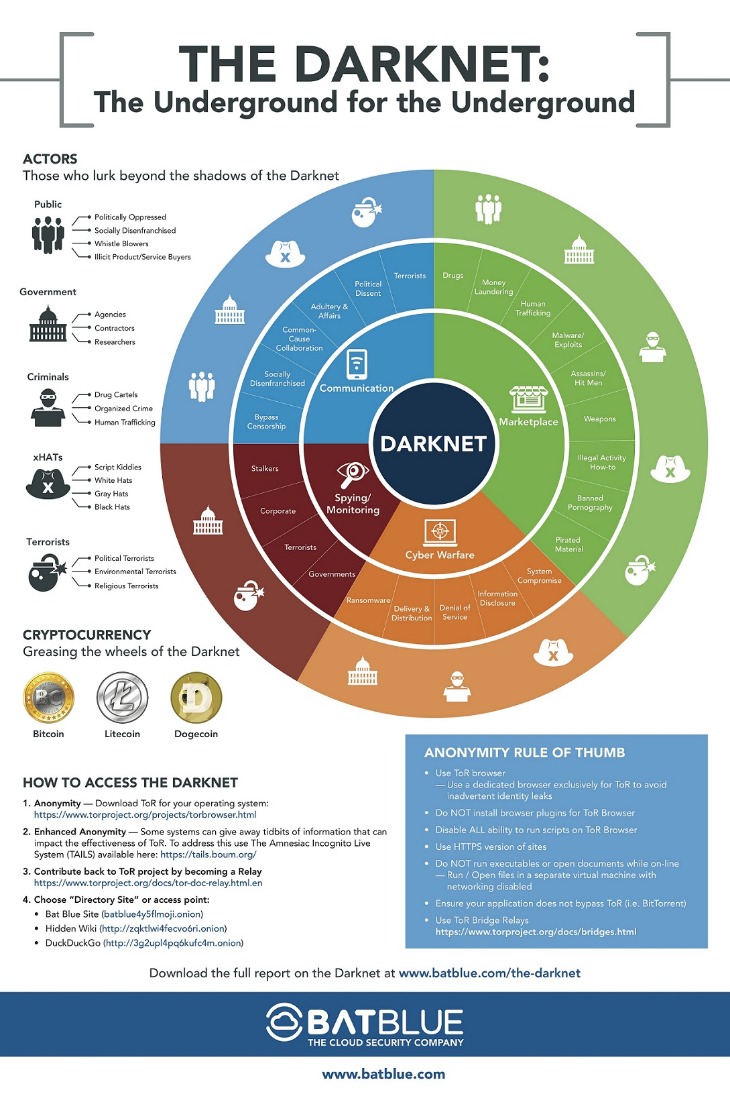
The dismantling of Archetyp Market marks a significant milestone in the ongoing battle against darknet drug trafficking. This operation exemplifies how international collaboration, intelligence sharing, and advanced cyber-forensic techniques are essential in combating these hidden marketplaces. Unlike many dark web platforms that vanish quickly, Archetyp’s five-year longevity demonstrated the resilience and adaptability of darknet markets. However, this resilience also underscores the critical role of law enforcement in disrupting illegal economies that operate under layers of anonymity. Archetyp Market had operated for over five years, amassing more than 600,000 registered users and processing at least EUR 250 million in transactions. With more than 17,000 product listings, the platform served as a hub for narcotics trafficking, including the sale of cocaine, MDMA, amphetamines, and particularly dangerous synthetic opioids such as fentanyl — making it one of the few major markets to openly permit such listings.
Authorities Take Down Darknet Market Archetyp In Joint Operation ‘Deep Sentinel’
Platform shutdowns can disrupt logistics, lead to arrests and seize goods, but they do not break apart the dark web’s recovery architecture. Just as Archetyp filled the void left by the dismantling of other online drug markets that existed before it, its successor may already be taking shape. Volatility has by now become a routine process used by vendors, users and administrators alike after the fall of each dark web market. What may look like disruption from the outside is, in practice, a recovery playbook now hardwired into the design of online drug markets. Archetyp may be gone, but the features that drove its success are already being carried forward by others. Code named Deep Sentinel, the operation was the latest in a series of strikes by European authorities against high-volume dark web markets.
More From The Los Angeles Times
“The investigation to bring to justice the administrators of and vendors on Nemesis Market continues,” a spokesperson for the U.S. Many of the closures have come from criminals choosing to gradually bring their operations to a close, and disappear with their riches. Visitors to the site are now greeted with a police poster saying “the platform and the criminal content has been seized”.
Arrest In Barcelona: The Mind Behind The Market
Darknet markets are oftentimes not limited by physical borders between countries, though some make the ecosystem less sustainable with their laws. These sites will come and go, but the void will always be filled by up-and-coming sites because the demand for these substances will never go away. In this section, we will talk about the top five darknet markets that hold operations in Germany across major cities like Hamburg, Berlin, etc. The purpose of these marketplaces on the Tor network is to provide users and providers of darknet services with anonymity and security, respectively. Transactions are carried out with the help of a cryptocurrency such as Bitcoin and dark wallets, which protect both the buyer and the seller.
Europol will continue working with our partners to make the internet safer for everyone.” One key moderator and six top vendors — some responsible for thousands of drug shipments — were arrested in Germany and Sweden. In total, the operation led to the seizure of 47 smartphones, 45 computers, large quantities of drugs, and assets worth €7.8 million. The number of arrests and amount of money seized were the most for any international Justice Department-led drug trafficking operation, he said. Transactions are encrypted, anonymized, and hardly visible to investigative authorities.
Ghost-Tapping And The Chinese Cybercriminal Retail Fraud Ecosystem
Europol says evidence seized in that “akedown “provided investigators with quantitative data and materials to identify suspects behind dark web accounts used for illegal activity.” The affidavit in support of the criminal complaint filed in Los Angeles outlines how the defendants operated a sophisticated online marketplace that offered encrypted communications between buyers and sellers, as well as an online forum to discuss vendors and the quality of their wares. The dismantling of Archetyp Market, one of the longest-running and largest dark web drug marketplaces, highlights international law enforcement’s coordinated efforts to combat the global illegal drug trade and address the distribution of dangerous substances such as fentanyl.
The openly accessible site darknetstats.com alone currently lists ten active Darknet trading platforms. “Drug trafficking on the internet has now established itself as a permanent distribution channel for drugs in Germany,” says the drug situation report published last September by the federal police. Accordingly, the crime statistics for 2018 show a 27.5% increase in “drug offenses in connection with the internet as a means of committing crimes” compared to 2017. Data seized in the action will be used in the ongoing investigations against platform sellers and users, potentially uncovering their identities and organizing arrests. The shut down of the markets came ahead of the one year anniversary of a spree shooting in Munich using a weapon bought on the darknet. Dutch authorities had been secretly running the site for more than a month after they seized its servers in the Netherlands, Germany and Lithuania.
The authorities have elsewhere proved to not be all too tactically skilled in their investigation. A simple comparison with the personal information and photos of the building’s residents at the Leipzig registration office could have cleared this other suspect. Instead, the Leipzig Police contacted property management and surveilled a totally innocent individual for over a week. It’s certain that Maximilian, should he be guilty of running Shiny Flakes, nonetheless operated with caution and sophistication for a long time and safeguarded himself in many respects. By using dozens of SIM cards and various cell phones he was able to keep certain channels of communication with suppliers separate. He also had the tools for setting up magnetic cards to send and receive goods from the package station with hacked post accounts.
The biggest takedowns in terms of volume – Silk Road, AlphaBay and Wall Street – have been police-led, but in 2018, the EMCDDA published a study which found that, of the more than 100 markets, just 10 percent closed as a consequence of overt police action. But it is hackers demanding ransom money, not police, that’s the main worry for those operating DNMs, says Patrick Shortis. “The biggest source of disruption to markets is currently coming from the ongoing distributed denial of service DDOS attacks that have knocked markets and forums offline intermittently over the last few months,” he says. Gibbons rejects the idea that shutdowns are a pointless and expensive waste of police time.
- Prior to, but in support of Operation Dark HunTor, Italian authorities also shut down the DeepSea and Berlusconi dark web marketplaces which boasted over 40,000 advertisements of illegal products.
- State, local, and other federal agencies also contributed to Operation RapTor investigations through task force participation and regional partnerships, as well as the multi-agency Special Operations Division.
- Within hours, vendors were resurfacing on forums, scrambling to reconnect with buyers, showing proof of their identities and reassuring business continued as usual.
- US agencies like the FBI, DEA narcotics law enforcement division and IRS tax authority all contributed to the investigation, along with police from Australia, Britain, Denmark, Switzerland, Ukraine and Moldova, with Europol playing a “coordinating role.”
- After dropping out of a culinary apprenticeship, the then 19-year-old began to fully devote his time to running Shiny Flakes and ultimately built up one of the most lucrative online drug shops in Germany.
The investigators also noted a high degree of purity in the “Chemical Revolution” products. BKA has not mentioned if the server administrators or any of the platform’s core operators were identified or arrested during the action. On the same day that Dutch police took control of the servers, the two German men running the site – a 30-year-old from Siegen and a 31-year-old from Cologne – were arrested. After their June 20 arrest the men were held in a prison in Bavaria and were only allowed to communicate with their lawyers. Postal Inspection Service, IRS Criminal Investigation, and HSI, and was supported and coordinated by the Department of Justice’s multi-agency Special Operations Division (SOD).
Led by Germany’s Federal Criminal Police Office (BKA) with support from the Netherlands and the Czech Republic, the operation extended to Spain, Sweden and Romania. Authorities seized Archetyp’s back-end servers in the Netherlands, froze €7.8 million in assets and arrested eight suspects, including a 30-year-old German national believed to be the platform’s founder. Behrouz Parsarad (Parsarad), residing in Iran, was the sole administrator of Nemesis. In this capacity, Parsarad established Nemesis and held full control over the marketplace and its virtual currency wallets. Parsarad enriched himself from fees he charged users of Nemesis with every transaction, pocketing what OFAC estimates to be millions of dollars over the course of the marketplace’s existence.