For the past decade, this small, yet influential faction of self-styled iconoclasts have vehemently opposed political correctness, social justice theory, and postmodernism in academia and professional settings. While the sordid platformism of IDW personalities is somewhat nascent, their rebuke of contemporary modes of thought—their distaste for the panoply of pluralism —dates back to the early 2010s, and even the mid-aughts. At this point in history, with the intellectual dark web getting fawning profiles in the New York Times and 4chan being written up in the Washington Post for changing the course of the 2016 American general election, examples of the relevancy of extremely online reactionaries are easy to find. But it can be harder to gauge what effect the Chinese intellectual dark web has on politics in China and abroad. In time, these boundaries may solidify as some thinkers renounce the movement and others join it, as some ideas are rejected and others sanctioned. If that happens, we may be able to revisit this question for a clearer answer.
Eric Weinstein: We Need Disagreeable People To Fix Our Dishonest Institutions
I interviewed Harris in 2018 for a Daily Beast feature on Rubin, and he was very complimentary of both the man and his show. Fear of offending his right-wing viewer base, Harris said, was why the ostensibly “liberal” Rubin would never criticize Trump for anything, at all. Harris and Szeps both acknowledged their belief that some of this conspiracy theorizing is fueled by failures of crucial institutions.
The “Intellectual Dark Web,” Explained: What Jordan Peterson Has In Common With The Alt-right
Treating the beliefs of the dark web as politically conservative views, rather than a sort of transpolitical meta-position — that is to say one critique of political correctness among others, albeit an extreme one — could do much to bring these sorts of left alternatives into the public debate. In the name of diversity, they claimed, students at Stanford rejected cultural excellence, demanding to remove “great books” written by “dead white men” from their general humanities syllabus. In the name of protecting minorities, went a similar argument, students at the University of Michigan abandoned the principle of free speech and sought to impose speech codes banning remarks that could be perceived as racist.
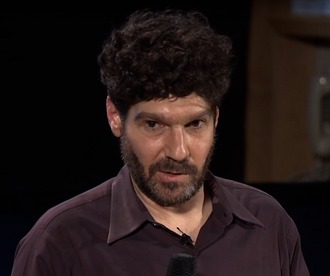
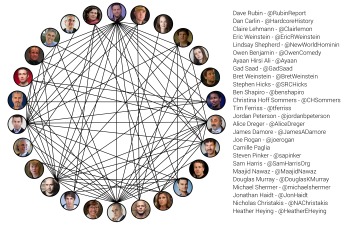
Still, the two histories are eerily similar, and the amount of crossover is uncanny enough that a history of gender criticism would bear more than a little similarity to this book. In 2018, Weinstein emerged as a prominent figure of the Intellectual Dark Web (IDW), a term he coined, half in jest, to describe a group of individuals from various fields who hold – or at least are inclined to explore – heterodox ideas, mainly through alternative media like YouTube. The members of the IDW don’t all share a political cause, but rather, Weinstein suggests, they share the personality trait of disagreeableness, or a willingness to stick to your beliefs even when it comes at a high cost.
Describing Alt-Right Communities And Their Discourse On Twitter During The 2018 US Mid-term Elections
In 1982’s Orality and Literacy, Ong theorised that literacy is so profoundly mind-altering that it “restructures consciousness”. Confined to a relatively small elite until the late Middle Ages, following the invention of the printing press this consciousness revolution spread, by degrees, to a majority of Western populations. As documented by historian Elizabeth Eisenstein, this had far-reaching disruptive consequences including the Reformation, the Thirty Years’ War, the modern nation-state settlement, and the scientific and industrial revolutions. Fixing our institutions is necessary before society can make real progress, Weinstein suggests, and a solution doesn’t lie solely with the left or right. This problem stems in part from two generations’ worth of dishonesty — both subtle and obvious — from society’s accepted experts, many of whom have been corrupted by their institutions’ relentless drive to survive and continue growing, no matter the cost. It’s from this problem, Weinstein suggests, that the Intellectual Dark Web emerged.
The Intellectual Dark Web: A History (And Possible Future) By Jamie Q Roberts

This is where the “Intellectual Dark Web,” with its warmed-over libertarian bromides, has been particularly useful for Republicans. While libertarianism is a conservative cousin of neoliberalism, because it claims to adhere to principles advocated by 19th century liberal figures like John Stuart Mill, it can be less authoritarian than Trump’s apocalyptic fascism, even as it also has been an important source of his racist rhetoric. Being a conservative rather than a reactionary, Roosevelt’s former general, Dwight Eisenhower, reconciled with social welfare state and promoted integration once he won the presidency back for Republicans in 1953. But his approach was despised by a group of young reactionaries who aimed to completely eradicate all “communistic” welfare programs, protect segregation, and install an explicitly Christian supremacist government.
Share This Article
We use the CLS token output to capture contextual embedding representations for all entries of the balanced dataset sample. BERT represents a sentence as a sequence of hidden states, which must be reduced to a single vector for downstream tasks. Therefore, BERT prepends a CLS token (short for “classification”) at the beginning of each sentence and uses a more straightforward method of taking the hidden state corresponding to the first token. The foundation of Linguistic Inquiry and Word Count (LIWC) stems from extensive scientific research spanning decades, showcasing the capacity of language to offer profound insights into individuals’ psychological states, encompassing emotions, cognitive styles, and social concerns. While some connections are straightforward, like the use of positive words indicating happiness, such as “happy,” “excited,” and “elated,” many relationships between verbal expression and psychology are less apparent. For instance, higher social standing and confidence are linked to elevated use of “you” words and reduced use of “me” words.
Trump Vows To Fight Tariff Ruling ‘with The Help Of The United States Supreme Court’
To highlight Eric’s background, it’s worth noting that he completed his PhD under the supervision of Raoul Bott, a distinguished mathematician. Bott made substantial contributions to topology, differential geometry, and mathematical physics. And it is less well appreciated is that the online alt-right orchestrated by Cernovich, Yiannopoulos, and others had origins quite similar to the somewhat more respectable dark web types that Weiss’s piece describes.
- In such ideas, there is a recurring tension between creating equality of opportunity and equality of outcome.
- There are certainly conservative people on campuses who have ostracized folks on the left in different instances; at least I know the folks at FIRE have taken up cases where they are advocating on behalf of a liberal student in a circumstance like that.
- Frustrated by the failure of their movements to destabilize American society, Kimball claimed, they channeled their discontent into “politically motivated” fields like queer theory or African-American studies, said to be inspired by “postmodern” Continental thinkers like Michel Foucault and Jacques Derrida.
- And this was a group of academics and writers and public intellectuals who were challenging the woke orthodoxy, they were raising the alarm about problems in academia, and they were really the first core set of people to challenge what we’re seeing now as BLM ideology, as radical gender theory, and as progressive governance of America’s cities.
- He also realized that because the political press mostly spent its time spectating at news conferences and collecting gossip, he could very easily present a sanitized message to the public while privately being far more radical.
- The same is true for men who call for women who have had abortions to be hanged by the neck until dead.
US Military Strikes Alleged Drug Boat From Venezuela And Kills 11, Says Trump
- Even controversial aspects of transgender advocacy, from youth gender therapy to denials of the reality of biological sex, are being debated in the pages of the Atlantic and the New York Times.
- To highlight Eric’s background, it’s worth noting that he completed his PhD under the supervision of Raoul Bott, a distinguished mathematician.
- Rogan was identified with the left as recently as 2020, when he says he voted for Joe Biden.
- The fact that many of these figures have no links to the conservative movement or denounce the Republican Party is hardly evidence to the contrary.
- However, as of late, the idea has been reconstrued to optimize the position of a vitriolic and self-serving status quo.
Fascism feeds off a narrative of supposed national humiliation by internal enemies. Defending a fictional glorious and virtuous national past, and presenting its enemies as deviously maligning the nation to its children, is a classic fascist strategy to stoke fury and resentment. Despite his best efforts, however, Buckley’s rebranding attempts were undermined more than a few times thanks to Bozell, his former college debate partner and the coauthor of his second book, McCarthy and His Enemies. A bombastic convert to Roman Catholic fundamentalism, Buckley’s brother-in-law was insistent that everyone be made to live according to his newfound beliefs, and he shoved them into the public eye at every opportunity, most prominently as the ghostwriter for Arizona Sen. Barry Goldwater, the Republican Party’s 1964 presidential nominee.
The IDW figures were hardly the only public intellectuals critical of the rise of illiberal progressivism in academia, social media, and mainstream journalism. Numerous liberals who were not a part of the IDW coterie, such as New York magazine’s Jonathan Chait, the Atlantic’s Anne Applebaum, and Canadian critic Phoebe Maltz Bovy were concerned about the phenomenon at the time. Some of them, Weiss wrote, were “purged from institutions that have become increasingly hostile to unorthodox thought,” and they came to define themselves by, and even take pride in, their exile, finding a new community there.
It would not be surprising to see many of the people discussed in Weiss’s piece defect to the forces of darkness over the next couple of years. The thinkers profiled included the neuroscientist and prominent atheist writer Sam Harris, the podcaster Dave Rubin, and University of Toronto psychologist and Chaos Dragon maven Jordan Peterson. The self-help stuff probably is to the benefit of the world that people who otherwise don’t have a direction are seeing somebody that they can admire and they’re following it.
But if you’re unwilling to make the hard decisions, you’re going to be left behind. As the group was confronted with a series of real-world political decisions—the rise of Trump, the COVID crisis, and the anti-CRT movement—it fractured, splintered, and decomposed. With some notable exceptions, such as Dave Rubin, Jordan Peterson, and Bret Weinstein, the “centrists” of the IDW could never move from the domain of criticism to the domain of action. They acted as if they could solve political problems through interminable podcast debates and failed to offer a viable theory of change. For postmodern thinkers, the task of the intellectual activist is to prevent or transform the speech of the powerful.